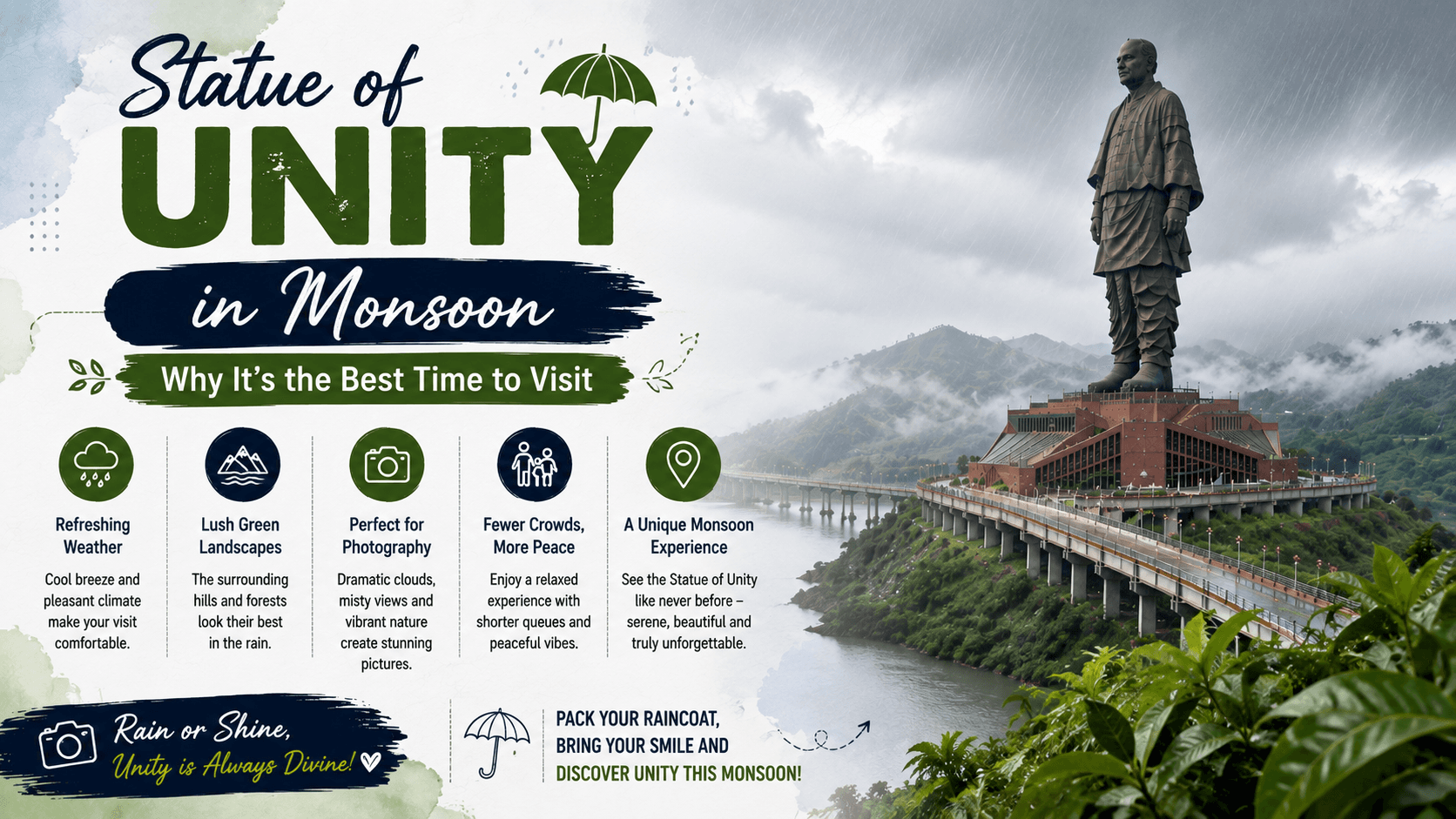


Statue of Unity in Monsoon: Why It's the Best Time to Visit
Nobody talks about the Monsoon Statue of Unity the way they should.
Every travel blog, every YouTube video, every Instagram reel shows the same thing. Clear blue sky. Dry hills. Winter crowds. The statue looked sharp against a cloudless afternoon.
That version is fine. But it is not the best version.
The best version shows up between July and September when the rains arrive in Kevadia and completely transform everything around the world's tallest statue. Green hills that look painted. A Narmada River running loud and full. Mist wrapping around the statue at 8 in the morning. A waterfall that does not exist at any other time of year.
If you have been waiting for the right time to visit this is it. And here is exactly why.
🌿 Everything Looks Different in Monsoon
Picture the Statue of Unity campus in winter. Brown hills. Dry river banks. Dusty paths between attractions. The statue stands tall but the landscape around it is flat and unremarkable in photos.
Now picture the same campus in statue of unity monsoon season.
The hills behind the statue turn a deep, rich green practically overnight when the first rains arrive. The Narmada fills up until it looks wide and powerful from the Viewing Gallery. The valley below the statue becomes lush in a way that genuinely surprises first time monsoon visitors.
This is the statue of unity green hills monsoon version that barely anyone photographs because most tourists visit in winter. The landscape transformation is real and it changes every single photo you take.
☁️ The Misty Viewing Gallery Experience
Here is something no winter visitor ever experiences.
On monsoon mornings, particularly in July and early August, the upper portion of the statue disappears into the clouds. You stand at the base looking up and the top of the world's tallest statue is hidden in mist. It looks cinematic in a way that no amount of editing can recreate in a clear sky photo.
Now go up to the Viewing Gallery at 153 metres during the statue of unity july august visit and you are standing inside that mist. The cloud literally moves past the gallery windows. The Narmada below appears and disappears through the fog. The dam stretches wide when the mist clears for a moment and then closes again.
This statue of unity monsoon experience at the Viewing Gallery is something that exists for approximately two to three months a year. It is the version of this destination that most visitors never see because they come in December.
💧 Zarwani Waterfall The Monsoon Exclusive
This is the clearest reason why I visit the Statue of Unity in monsoon rather than any other season.
Statue of unity waterfall monsoon specifically Zarwani Waterfall near Kevadia is a monsoon exclusive attraction. It does not flow in winter. It does not flow in summer. It exists only between July and September when the rains feed the forest streams that eventually tumble down to create it.
An eco-tourism forest bus takes you through dense jungle to reach it. The journey through the green forest is half the experience. The waterfall at the end tucked quietly into the trees with the sound of rain and forest around it is the kind of place you sit at for a while without wanting to leave.
No winter visitor has ever seen this. No summer visitor either. This waterfall belongs exclusively to the monsoon traveller.
For complete information on booking the Zarwani Eco Tour and other monsoon attractions visit our statue of unity complete travel guide which covers everything you need to plan your monsoon visit.
🌸 Valley of Flowers at Its Absolute Peak
Most people know the Valley of Flowers exists at the Statue of Unity. Most people do not know that visiting it in winter means seeing it at maybe 40 percent of what it actually looks like.
Statue of unity valley of flowers in monsoon is the real version. 24 acres. 300 plus flower varieties. All of them are in full bloom simultaneously between July and September. The colours are genuinely overwhelming in the best possible way. Butterflies are everywhere. The smell after rain on thousands of blooming flowers is something that stays with you.
Winter visitors walk through a tidy, pleasant garden. Monsoon visitors walk through something that looks like it was designed by someone with an unlimited budget and no restraint.
The statue of unity rainy season version of Valley of Flowers alone justifies the trip timing.
🦁 Jungle Safari in Monsoon More Alive Than Any Other Season
The Jungle Safari at Statue of Unity runs through the year but monsoon is genuinely the best season for it.
Green and thick forest cover means the safari route looks completely different from the dry season version. Animals are more active in cooler weather. Deer move through clearings that look lush and wild rather than dry and dusty. The whole experience feels more like real wildlife and less like a managed enclosure.
Read the full experience breakdown in our detailed Jungle Safari at Statue of Unity in Monsoon guide which covers animals, timings, booking tips, and what to expect.
📅 Is Monsoon Actually a Good Time for Statue of Unity?
Is monsoon a good time for a statue of unity? Let us answer this directly because most travel content dances around it.
Yes. With clear eyes about what you are signing up for.
You will not always get a perfectly clear Viewing Gallery view. Some days the mist covers everything from top to bottom and visibility is low. This is part of the monsoon experience, not a disappointment. The days when the mist breaks and you catch that aerial view of the dam and river between cloud movements are genuinely more memorable than any clear winter view.
Outdoor walking paths get wet. Carry a raincoat. Waterproof footwear is helpful. The attractions themselves all operate during monsoon; the Viewing Gallery, Jungle Safari, Valley of Flowers, Zarwani Eco Tour, Glow Garden, and Narmada Aarti all run through the rainy season.
Crowds are noticeably lighter than during the peak winter season. You get more space at every attraction, shorter queues, and a more relaxed overall pace.
The best time to visit the Statue of Unity depends on what you want. For drama, green landscapes, exclusive waterfall access, and thin crowds monsoon wins every time.
Check the detailed month by month breakdown in our statue of unity complete travel guide to plan your exact dates.
🏕️ Plan a Monsoon Long Weekend Here
Statue of unity in monsoon works perfectly as a long weekend trip. Two days covers everything comfortably: Viewing Gallery, Valley of Flowers, Jungle Safari, Zarwani Waterfall, Sardar Sarovar Dam viewpoint, and Glow Garden in the evening.
For families, couples, and groups who want everything sorted before they leave home, check ourstatue of unity long weekend monsoon packages that bundle accommodation near Kevadia with tickets for all major attractions.
One booking. Everything confirmed. Arrive and enjoy without managing logistics on the day.
🎟️ Book Before You Go
Even in monsoon, Viewing Gallery slots and Jungle Safari morning slots fill up on weekends. Walk-in is always a risk on busy days.
Book your statue of unity july august visit tickets in advance and arrive with confirmed slots so nothing you want to do is sold out when you get there.
👉 Book tickets and monsoon packages attheunitytourism.com
✅ Why Monsoon is the Best Time to Visit Statue of Unity
Let us put it simply.
Winter gives you clear skies and comfortable weather. Summer gives you heat. Statue of unity monsoon season gives you something neither of those seasons can offer a living, green, dramatic version of this destination that includes a waterfall nobody else sees, a valley of flowers nobody else sees at full bloom, misty statue views nobody else photographs, and a jungle safari through a forest that is actually alive.
Why visit the Statue of Unity in monsoon? Because this version of it only exists for three months a year. And most tourists miss it entirely.
Do not miss it.
FAQs
Yes, monsoon from July to September is one of the best times to visit. You get Valley of Flowers at full bloom, misty Viewing Gallery mornings, green hills, and lighter crowds than peak winter season.
Monsoon brings exclusive experiences including Valley of Flowers in full bloom, misty statue views from the Viewing Gallery, lush green jungle safari, and dramatic Narmada River and Sardar Sarovar Dam views.
Yes, the campus operates fully during monsoon season. Viewing Gallery, Jungle Safari, Valley of Flowers, Glow Garden, and Narmada Aarti all run through July, August, and September. Campus is closed every Monday throughout the year.
Early morning between 8 AM and 10 AM gives you the best monsoon experience. Mist is heaviest in morning hours, crowds are thinnest, and the green landscape with soft morning light gives you the most dramatic photos of the entire visit.
Visit theunitytourism.com for complete monsoon tour packages including accommodation near Kevadia and tickets for all major attractions. Book in advance especially for weekend visits as Viewing Gallery and Jungle Safari slots fill up even during monsoon season.
Comments (0)
No comments yet. Be the first to share your thoughts!